August Beauty Gardenia Varieties: How the Cultivars Compare
Pick the wrong gardenia cultivar and you will know by March. The leaves brown after a hard freeze, the buds drop, and an expensive shrub sits there sulking. Pick the right one and August Beauty gives you glossy evergreen foliage and 3-inch double white flowers that scent a whole patio.
Most of the calls we get about this come back to one thing. Buyers choose by flower photo or by a one-line hardiness tag, and they never match the plant to their winter.
Read on for the mistake we see most, a side-by-side look at August Beauty, Radicans, Mystery, Frost Proof and Kleim's Hardy, and a short way to choose between them.
The Mistake We See Most with August Beauty Gardenia: Ignoring Winter
Nearly every lost gardenia we hear about was fine until the first hard freeze. The plant was never matched to the coldest night of the year, and the cultivar took the blame.
The tag may say zone 7b, but most of the older gardenia cultivars are cold hardy only to USDA zone 8, while newer and smaller selections reach at least zone 7a. August Beauty sits right on that line in 7b. Do these three checks before you buy:
- Look up your zone, then look up the coldest night of your last few winters, not just the average.
- If you are in zone 7b or colder, shortlist Frost Proof and Kleim's Hardy before you look at flower photos.
- Pick a planting spot that blocks winter wind, because a sheltered gardenia survives cold that kills an exposed one.
One of the most common questions we get is whether a gardenia that browned in winter is dead. Wait for new growth in spring before you cut anything, and see our winter care guide for protecting plants at the cold edge of their range.
This table sets the five cultivars side by side so you can check hardiness and size first.
| Cultivar | Mature Size | Hardiness | Growth Habit | Bloom Character |
|---|---|---|---|---|
| August Beauty | 4-6 ft tall, 3-4 ft wide | Zones 7b-10 | Upright, moderate growth | Standard double white flowers, long season |
| Radicans | 2-3 ft tall, spreading wider | Zones 8-10 | Dwarf, mounding, dense | Smaller double flowers, profuse blooming |
| Mystery | 4-6 ft tall and wide | Zones 8-10 | Upright, moderate growth | Large double flowers, fragrant |
| Frost Proof | 4-6 ft tall and wide | Zones 7-10 | Upright, moderate growth | Standard double flowers, improved cold tolerance |
| Kleim's Hardy | 3-4 ft tall and wide | Zones 7-10 | Compact, moderate growth | Standard double flowers, very hardy |
August Beauty Gardenia: The Standard Choice
August Beauty is the cultivar we point most customers to, so start here. Its size, flowers and light needs set the standard the other four are measured against.
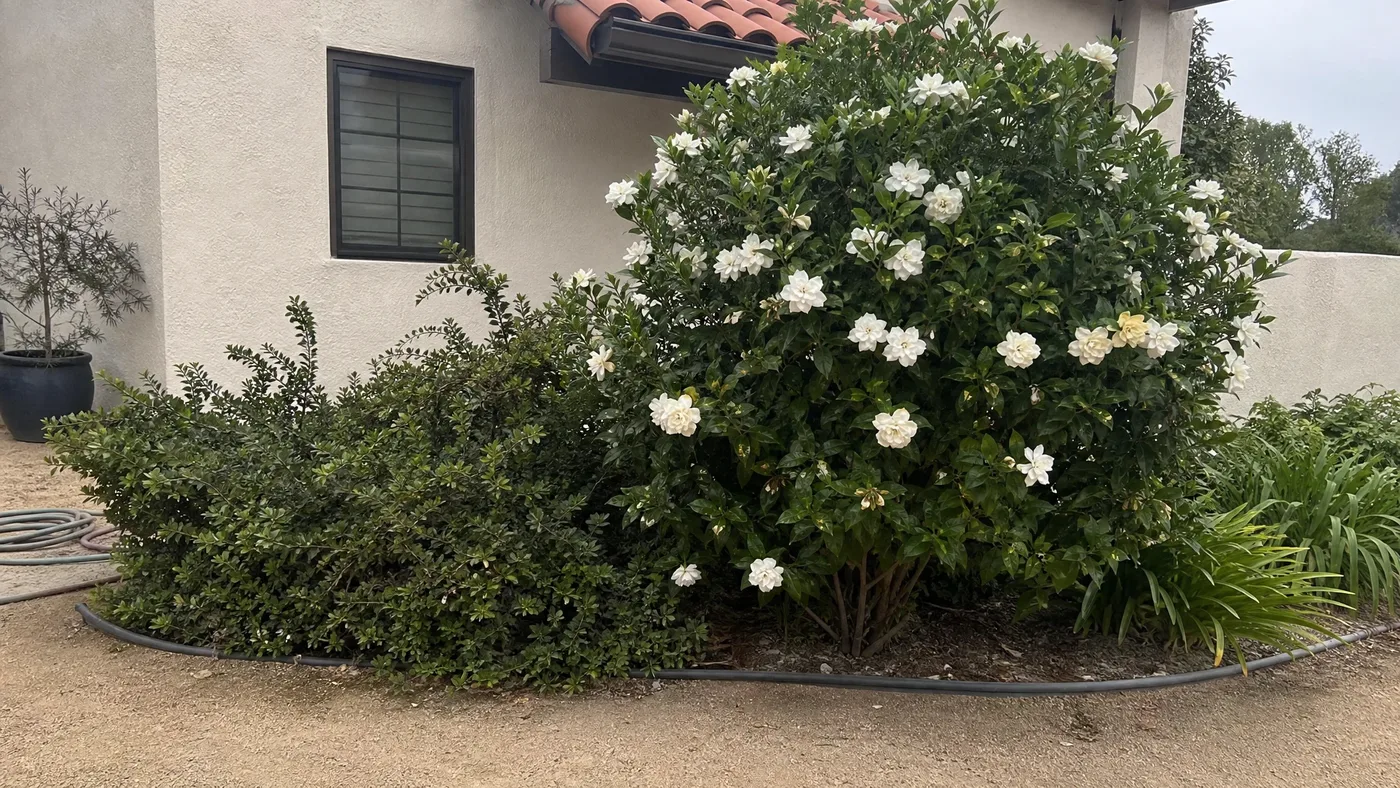
August Beauty is the benchmark cultivar. It reaches 4 to 6 feet tall and only 3 to 4 feet wide at maturity, so it is narrower than the species, which can reach 8 feet. Shoppers often find that species sold under the name cape jasmine. That makes it a substantial but tidy shrub for a foundation planting or specimen role. It grows at a medium pace, so you see results without an aggressive take-over.
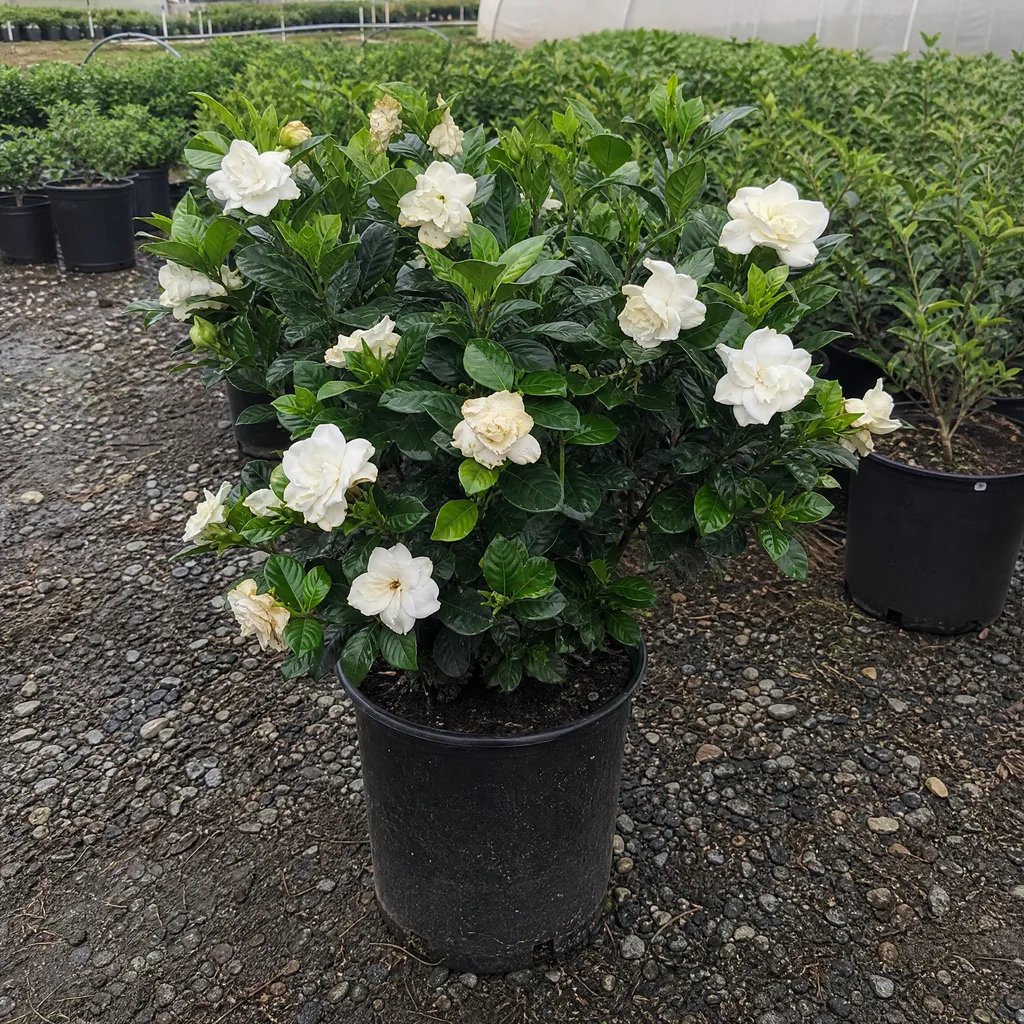
The flowers are classic double blooms about 3 inches across, white to cream and aging to yellow. Flowers appear late spring through summer, with the heaviest flush in early summer and sporadic blooms after that. The fragrance is the hallmark sweet gardenia scent that fills a garden.
Hardy to zones 7b through 10 on paper, August Beauty works across much of the South and lower Midwest. In zone 7b it is borderline and needs winter protection, so check with your local extension before planting at the northern edge.
For light, give it morning sun and afternoon shade. Plenty of advice says to plant gardenias in full sun for steadier blooming, and we don't follow it. Hot afternoon sun stresses the plant, and stressed gardenias drop buds. Our sun requirements guide covers the details.
Pros: Reliable bloomer, widely available, balanced size for most gardens, good fragrance, moderate cold tolerance for a gardenia.
Cons: Not the most cold-hardy option if you're in zone 7, not the most compact if space is tight.
Radicans and Mystery: The Dwarf and the Large-Flowered Option
These two depart from August Beauty in opposite directions. Radicans shrinks the plant, and Mystery enlarges the flower.
Radicans: The Dwarf Option
If August Beauty feels too large, Radicans offers a smaller profile. This cultivar grows just 2 to 3 feet tall but spreads wider, creating a low, mounding shape that works well as a ground cover or low hedge.
The flowers are smaller double blooms, but they appear in abundance, so you get a generous floral display across the plant. The foliage is similarly compact and dense, giving Radicans a neat, tidy appearance year-round.
Radicans is hardy to zones 8 through 10, so it's more tender than August Beauty. In zone 7, it won't survive outdoors without significant protection. This cultivar thrives in containers on southern porches or in warm coastal gardens.
Pros: Perfect for small spaces, container-friendly, profuse smaller flowers, dense foliage, neat habit.
Cons: Less cold-hardy than August Beauty, smaller blooms if you want that show-stopping flower size, requires careful watering in containers.
Mystery: The Large-Flowered Choice
Choose Mystery if you want bigger, more dramatic blooms. This cultivar produces large double flowers that are genuinely impressive close-up. The fragrance is rich and strong. It reaches the same 4 to 6 feet as August Beauty, so it occupies comparable space in the landscape.
Mystery is hardy to zones 8 through 10, so it's one step south of August Beauty. It needs the warmth of zone 8 or warmer, making it best for the lower South and coastal regions.
Bloom timing and care requirements are similar to August Beauty. You'll grow Mystery the same way: acidic, well-drained soil rich in organic matter, moderate to consistent moisture, and protection from prolonged drought.
Pros: Larger, more showy flowers, strong fragrance, similar size and growth habit to August Beauty, makes a statement.
Cons: Less cold-tolerant than August Beauty, and primarily for zones 8-10.
Frost Proof and Kleim's Hardy: Cold-Tolerant Picks
If you're in the northern part of gardenia's range, zone 7 especially, Frost Proof or Kleim's Hardy are worth serious consideration.
Frost Proof is bred specifically for improved cold tolerance. It reaches 4 to 6 feet tall and wide, matching August Beauty in size. The blooms are standard double flowers. Hardy to zones 7 through 10, it gives you a full-size gardenia with better odds in zone 7 than August Beauty. Many growers consider Frost Proof the best option for zone 7 gardeners who want a traditional gardenia shrub.
Kleim's Hardy is a compact, hardy selection that grows 3 to 4 feet tall and wide. It's hardy to zones 7 through 10 as well. The smaller size makes it ideal if you want a cold-hardy gardenia but also need something more restrained. The flowers are standard double blooms with full fragrance.
Both of these cultivars share the same soil, water, and light needs as August Beauty. The key advantage is cold hardiness, which matters most in late-winter hard freezes that can damage or kill tender gardenias. In zone 7, winter protection is still wise for any gardenia, but these two give you the best odds.
What we tell zone 7 customers is to buy one of these two and still mulch the roots before the first freeze. A hardier cultivar improves your odds, but it does not make winter protection optional.
Pros: Improved cold tolerance, reliable bloomers, Frost Proof matches August Beauty size, Kleim's Hardy offers compact form, both work in zone 7.
Cons: May be harder to find than August Beauty in nurseries, Kleim's Hardy is smaller so less of a specimen effect, still require winter care in zone 7b.
How to Choose: Best for Your Garden
Match the cultivar to your winter first and your space second. Find the line below that sounds most like your garden.
You want a standard-size shrub with good cold tolerance: August Beauty or Frost Proof. August Beauty is more widely available, while Frost Proof edges ahead in zone 7. For full care guidance, see our August Beauty Gardenia care guide.
You want a showy, large-flowered cultivar: Mystery. Expect zones 8-10. The larger blooms make it a focal point near a window or patio where you can enjoy the scent and see the flowers up close.
You want a dwarf or ground-cover form: Radicans. Use it in containers, as a low border, or where space is limited. It's the most tender of the group, so confirm zone 8 or warmer before planting.
You're at the northern edge of gardenia hardiness (zone 7): Frost Proof or Kleim's Hardy. Both offer better winter survival odds. Kleim's Hardy is especially useful if you also want a more compact plant.
You want the most reliable, widely available option: August Beauty. It's the standard, balanced choice. Check your zone first to confirm it's suitable, especially if you're in zone 7.
Use this table as a last check once you know your zone and how much room you have.
| Your Situation | Best Choice | Why |
|---|---|---|
| Zone 7, full-size shrub | Frost Proof | Superior cold tolerance in borderline zone |
| Zone 7, compact plant | Kleim's Hardy | Small footprint plus hardy to zone 7 |
| Zone 8-10, standard shrub | August Beauty | Reliable, widely available, proven performer |
| Zone 8-10, dramatic blooms | Mystery | Larger flowers, impressive close-up |
| Small spaces or containers | Radicans | Dwarf form, dense habit, portable |
| Foundation planting, any zone 8+ | August Beauty | 4-6 ft mature size, balanced proportions |
Match the Cultivar to Your Winter
Most gardenia failures trace back to a cultivar that never suited the winter it faced. August Beauty is the dependable standard from zone 8 up and borderline in 7b. Frost Proof and Kleim's Hardy give you better odds in zone 7, Radicans suits small spaces and pots in warm zones, and Mystery earns its place for the big flowers.
August Beauty Gardenia
Nursery-grown August Beauty Gardenia in sizes from 1 Gallon, shipped to your door.
From $33.97
Shop Now →As a small grower with our own farms, we care about this because we grow and sell top-quality shrubs, and we would rather you pick the right gardenia the first time than lose it in its first winter.